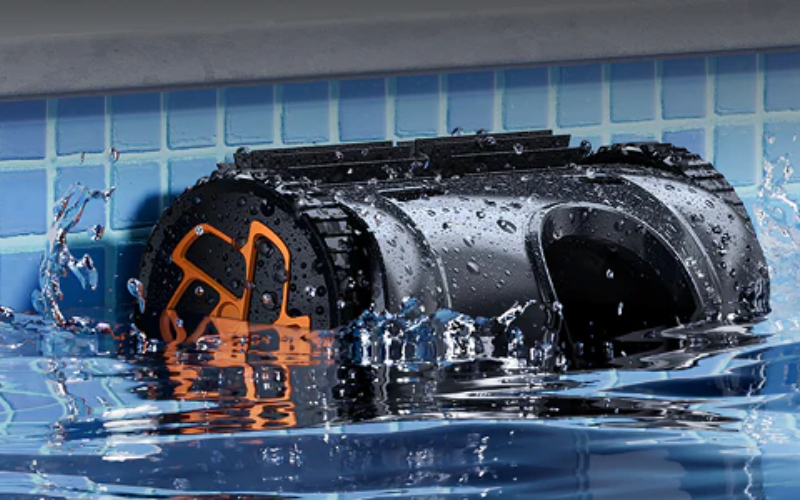
Keeping a swimming pool clean is not only about removing debris from the floor. Many of the most stubborn contaminants collect on pool walls and along the waterline. Oils, sunscreen residue, algae, and mineral buildup often stick to these areas. Over time, they form visible stains that are difficult to remove.
An effective pool cleaner must do more than move across the bottom. It needs the ability to climb walls, maintain contact with vertical surfaces, and scrub the waterline where grime tends to accumulate. Several technical and design factors determine how well a cleaner performs these tasks.
Understanding these features helps pool owners choose equipment that delivers consistent and thorough cleaning.
Why Pool Walls and Waterlines Are Harder to Clean
Pool floors collect leaves, sand, and dirt. These particles usually settle due to gravity. Many basic cleaning tools handle this part well.
Walls and waterlines present different challenges.
The waterline is where air, water, and organic materials meet. This area often collects oils from swimmers, sunscreen residue, body lotions, and airborne dust. These substances stick to the surface and create a thin film. Over time, the film traps dirt and becomes more visible.
Pool walls can also develop algae or biofilm. Even when water chemistry is balanced, microscopic organisms may attach to surfaces. Once attached, they are harder to remove.
Because of these conditions, effective cleaning requires both strong traction and active scrubbing.
Strong Wall-Climbing Ability
One of the most important features of an effective cleaner is its ability to climb vertical surfaces.
Wall climbing depends on several mechanical factors. These include motor power, weight distribution, and traction materials. If the cleaner cannot maintain grip, it will slide down before completing the cleaning cycle.
Good climbing ability allows the device to reach:
- Upper pool walls
- Corners and slopes
- The waterline area
Pools with smooth tile, fiberglass, or vinyl liners require especially reliable traction. Some surfaces become slippery when algae or oils build up.
When a cleaner maintains stable contact with the wall, its brushes can apply enough pressure to remove dirt and organic buildup.
Effective Brush Design
Brush design plays a major role in cleaning performance. Simply passing over a surface is not enough to remove attached debris.
High-quality cleaners usually use active rotating brushes. These brushes spin while the cleaner moves. The rotation creates friction against the pool surface.
This scrubbing action helps loosen:
- Algae films
- Oil residues
- Calcium deposits
- Dirt trapped in surface textures
Different materials are used for brushes depending on pool type. Softer brushes work well for vinyl liners. Firmer materials are more effective on tile or concrete surfaces.
A cleaner with strong brushes can remove contaminants before they become stubborn stains.
Intelligent Navigation and Coverage
Cleaning efficiency is also influenced by how the cleaner moves inside the pool.
Random movement may eventually cover the entire surface, but it often leaves areas untouched for long periods. Modern cleaning systems often use programmed navigation patterns to improve coverage.
These systems guide the cleaner across the floor and up the walls in a structured way. The result is more consistent contact with all surfaces.
Better navigation helps the cleaner reach areas where buildup usually forms, including:
- Waterline edges
- Pool corners
- Transition slopes between floor and wall
Efficient coverage ensures that the entire pool receives regular cleaning, not just the easiest sections.
Consistent Suction and Debris Capture
While brushing loosens dirt, the cleaner must also remove it from the water.
Strong suction ensures that debris does not simply drift back into the pool. Once particles are lifted from the wall or waterline, they must be captured immediately.
Effective filtration systems trap both large debris and fine particles. This includes dust, sand, and organic material.
When filtration works well, the cleaner prevents dirt from settling again on the same surfaces. This reduces the chance of stains forming along the waterline.
Some systems also separate debris by size. This helps maintain strong water flow during the cleaning cycle.
Stable Movement and Balanced Design
A well-balanced cleaner moves smoothly across different pool surfaces.
If the device is too light, it may lose contact with the wall. If it is poorly balanced, it may tilt or rotate in unstable ways.
Design elements that improve stability include:
- Even weight distribution
- Wide traction tracks or wheels
- Low center of gravity
Stable movement ensures that the cleaner stays firmly against the pool surface while climbing. This allows the brushes to work effectively on vertical areas.
When the cleaner maintains stable contact, the result is deeper and more reliable cleaning.
Performance in Larger Pools
Pool size can also affect cleaning performance.
In larger pools, cleaners must operate for longer periods to cover all surfaces. If the battery or cleaning cycle is too short, the cleaner may stop before reaching the waterline or upper walls.
Longer operation time improves overall coverage. It allows the cleaner to revisit areas where dirt tends to accumulate.
Some pool owners look for models designed for extended cleaning cycles. Options such as the iGarden Pool Cleaner are often considered in this context because longer runtime can help ensure the device has enough time to climb walls and reach the waterline during the cleaning process.
In larger residential pools, extended cleaning capacity becomes especially important.
Adaptability to Different Pool Shapes
Not all pools have simple rectangular designs.
Many residential pools include curved walls, steps, ledges, and varying depths. These features can interfere with cleaning patterns.
A capable cleaner must adjust to different shapes and surfaces without losing traction or navigation efficiency.
Flexible movement allows the cleaner to transition between:
- Flat floors
- Inclined slopes
- Vertical walls
When the device adapts smoothly, it maintains consistent cleaning pressure across all surfaces.
This adaptability helps ensure that even complex pool layouts receive thorough cleaning.
The Importance of Regular Cleaning Cycles
Even the most capable cleaner performs best when used regularly.
If wall and waterline debris remain for long periods, buildup becomes harder to remove. Oils and minerals can bond with the surface and form visible stains.
Frequent cleaning cycles prevent this accumulation.
By removing dirt early, the cleaner reduces the need for manual scrubbing or chemical treatments. This keeps the pool looking clear while maintaining balanced water conditions.
Regular automated cleaning also saves time for pool owners.
Choosing a Cleaner That Handles Vertical Surfaces
Many people assume all pool cleaners perform the same way. In reality, performance varies greatly depending on design.
For effective wall and waterline cleaning, the most important features include:
- Reliable wall-climbing ability
- Strong rotating brushes
- Stable traction systems
- Consistent suction and filtration
- Intelligent navigation patterns
- Sufficient runtime for full pool coverage
When these factors work together, a cleaner can remove debris from areas that are usually difficult to reach.
Keeping pool walls and waterlines clean not only improves appearance. It also helps maintain healthier water conditions and reduces long-term maintenance.
Selecting equipment with these capabilities ensures that the entire pool receives the level of cleaning it truly needs.