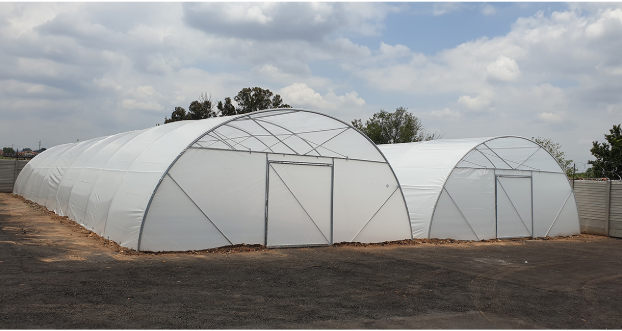
Agricultural tunnels, also known as hoop houses or mini-greenhouses, are increasingly used in professional farming. Among them, the Movable Tunnel Width 2.50 m offers significant advantages, especially for small to medium-sized farms or for crops requiring rotation. In this article, we will explore the features, benefits, limitations, and best practices for using this type of tunnel.
What is a Movable Tunnel?
A movable tunnel is a lightweight greenhouse that can be relocated according to crop needs or field rotation. It is typically built on a galvanized tubular frame and may rest on skids, wheels, or other supports that allow relocation. Some manufacturers offer structures with galvanized tubes, easy to assemble and disassemble.
The covering is usually a flexible polyethylene sheet, but insulated panels can also be used depending on the model.
Why Choose a Width of 2.50 m
1. Suitable for Small Plots
A 2.50 m width is narrower than larger tunnels (4–5 m), making it ideal for small plots, vegetable gardens, or farms that want to maximize space according to field layout.
2. Easier Handling and Movement
A narrower tunnel is lighter and easier to move using skids or wheels. This reduces costs and simplifies relocation, allowing more flexibility in crop rotation management.
3. Better Climate Management
- Thermal control: The smaller width allows the cover to be stretched more easily, improving insulation and wind resistance.
- Ventilation: Although lateral ventilation is possible, larger tunnels often require more complex systems. In a 2.50 m tunnel, managing airflow can be simpler.
4. Lower Cost
With a smaller frame, the cost of materials (tubes, cover, anchoring) can be lower, making this tunnel type attractive for small producers or temporary setups.
Typical Technical Specifications
Even though 2.50 m tunnels are less common in catalogs, certain technical features are important:
- Frame: Galvanized tubes (diameter varies by manufacturer), sometimes reinforced to support tension and wind loads.
- Hoop spacing: Can vary according to use (1.5–2.5 m between arches).
- Height: Useful height under the ridge can reach approximately 2.4 m.
- Anchoring / mobility: The structure may rest on skids or wheels, with galvanized square frames (100×100 mm) to facilitate movement.
- Covering: Polyethylene film, truck tarp, or sandwich panels depending on the model.
- Standards: Some tunnels comply with EN-13031 for mechanical resistance and durability.
Advantages of a Movable 2.50 m Tunnel
- Flexible Crop Rotation
Being movable allows the tunnel to be repositioned across plots, facilitating crop rotation and soil management. - Lower Investment
Smaller frame and lighter materials reduce the cost compared to larger tunnels. - Easy Assembly / Disassembly
Simple tubular arches and mobile frames make setup and teardown faster, even at the start and end of the season. - Optimized Space Use
For narrow or irregular plots, a 2.50 m tunnel can adapt without taking space from other crops. - Improved Microclimate Control
The small width helps manage temperature more easily, which is crucial for sensitive crops.
Constraints and Limitations
- Limited capacity: Only 2.5 m width, so the planting area is smaller than wider tunnels.
- Wind and stability: Even though easier to move, proper anchoring is required to withstand wind.
- Less lateral ventilation: Depending on design, airflow may be less effective than in wider tunnels.
- Availability: Not all manufacturers offer movable tunnels in this exact width; custom production may be needed.
- Durability: Material quality (tubes, film, anchoring) affects the tunnel’s lifespan compared to permanent structures.
Best Practices for Use
- Soil Analysis
Study soil type, drainage, and compaction before installing a movable tunnel, and ensure proper anchoring. - Cover Selection
Use UV-resistant polyethylene sheets or reinforced films for durability, especially in regions with strong sun or wind. - Strong Anchoring System
Skids, wheels, or helix anchors should be used to prevent movement or damage from wind and cover tension. - Crop Rotation
Take advantage of mobility to rotate crops, improving soil health and reducing disease risk. - Regular Maintenance
Inspect cover tension, arches, and anchoring points to prevent deformation or damage. - Climate Management
Provide proper ventilation through side openings or removable end walls to avoid overheating or excessive humidity.
Conclusion
The movable tunnel with a width of 2.50 m is a flexible, cost-effective solution for small or medium-sized farmers and those wishing to optimize crop rotation. Its smaller width makes it manageable, but careful selection of the structure, anchoring system, and cover is essential for durability and efficiency. With proper planning and maintenance, this tunnel can be a valuable tool in a modern, adaptable farm.
FAQs
Q1: Can a 2.50 m tunnel really be moved?
Yes. Movable tunnels are designed with frames, skids, or wheels, allowing relocation across different plots.
Q2: Are tunnels of this width available from all manufacturers?
Not always. Some manufacturers may require custom sizes or adaptations for this width.
Q3: What kind of cover should be used?
UV-resistant polyethylene sheets are recommended. Thermal films or insulated covers can also be used depending on climate and crops.
Q4: How should a movable tunnel be anchored?
Helix anchors, metal frames, skids, or wheels can be used depending on design. Anchoring must resist wind and cover tension.
Q5: Is a 2.50 m tunnel cheaper than a larger one?
Generally yes, due to lighter materials and smaller cover area, but price depends on material quality and mobility system.
Q6: What crops are suitable?
Ideal for vegetables and short crops, and for fields requiring frequent rotation. Taller or sprawling crops may need a wider tunnel.