The football world stops whenever we see Australia vs South Korea on the schedule. This isn’t just a simple game of soccer; it is a battle for pride between two of Asia’s most successful sporting nations. Whether it is the tactical “Taegeuk Warriors” or the gritty “Socceroos,” these matches always deliver drama. From the first time they met back in 1967 to the heart-stopping moments of the most recent AFC Asian Cup, this rivalry has grown into a classic. Fans from Sydney to Seoul know that when these two teams step onto the grass, anything can happen.
I remember watching the 2015 Asian Cup Final where the atmosphere was absolutely electric. It felt like the whole world was watching to see who would blink first. That game perfectly showed why Australia vs South Korea is such a special fixture. It features high speed, physical strength, and amazing technical skills. In this article, we are going to dive deep into the history, the numbers, and the stories that make this matchup a “must-watch” event for any sports lover.
The Deep History of the Socceroos and Taegeuk Warriors
The story of Australia vs South Korea began over 50 years ago in South Vietnam. Since then, the two nations have played dozens of times. For a long time, Australia played in the Oceania region, while South Korea dominated Asia. But when Australia joined the Asian Football Confederation (AFC) in 2006, the rivalry moved to a whole new level. Now, they don’t just play for fun; they play for trophies and World Cup spots.
In the early days, Australia often had the upper hand, but South Korea quickly caught up. They developed a style of play that is famous for “fighting spirit” and incredible fitness. On the other side, Australia brought a physical, European-influenced style that many Asian teams found hard to handle. This clash of styles is exactly what makes Australia vs South Korea so interesting to analyze. Every match feels like a chess game where the players are moving at 100 miles per hour.
Australia vs South Korea Head-to-Head Stats Table
To truly understand this rivalry, you have to look at the cold, hard numbers. While the wins and losses are very close, each team has had its era of dominance. Here is a detailed breakdown of how they stack up against each other:
| Category | Australia (Socceroos) | South Korea (Taegeuk Warriors) |
| Total Matches Played | 31 | 31 |
| Total Wins | 11 | 9 |
| Matches Drawn | 11 | 11 |
| First Meeting Year | 1967 (Won 3-2) | 1967 (Lost 2-3) |
| Most Recent Result | 1-2 (Loss – Feb 2024) | 2-1 (Win – Feb 2024) |
| Asian Cup Titles | 1 | 2 |
| World Cup Appearances | 6 | 11 |
Recent Thrillers: The 2024 Asian Cup Drama
The most recent chapter of Australia vs South Korea took place in February 2024. This was a quarter-final match in the AFC Asian Cup that left fans breathless. Australia was leading for most of the game thanks to a goal by Craig Goodwin. It looked like the Socceroos were going to head into the semi-finals. But you can never count out South Korea.
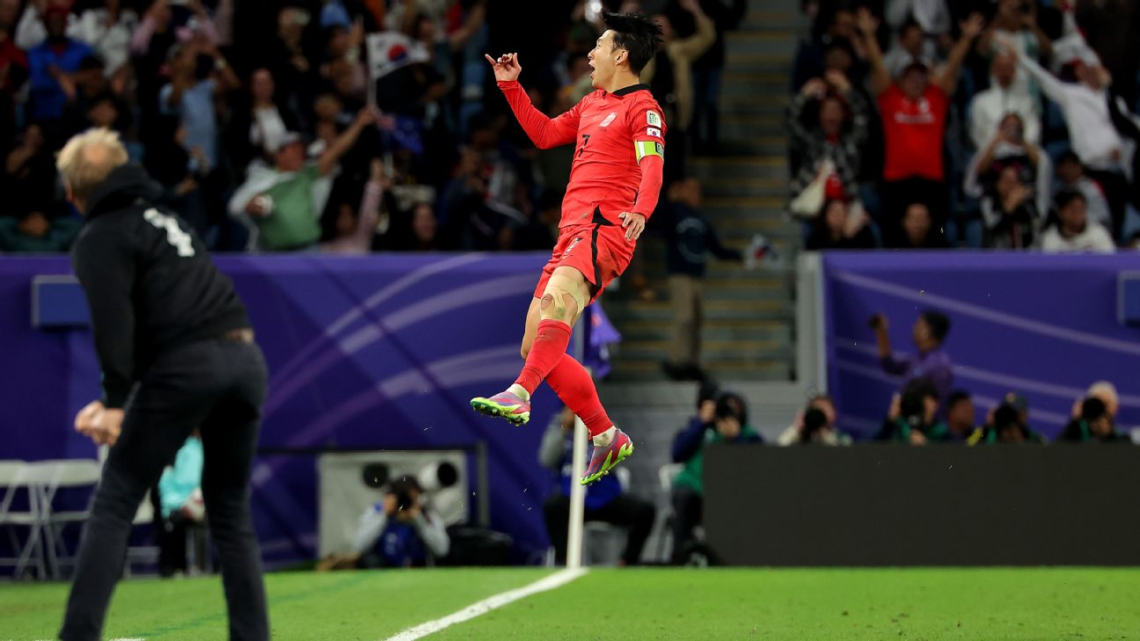
In the final minutes of stoppage time, South Korea earned a penalty, which Hwang Hee-chan scored with cool nerves. Then, in extra time, the legendary Son Heung-min scored a world-class free kick to win the game. This match proved that Australia vs South Korea is never over until the final whistle blows. It was a heartbreaking moment for Aussies but a glorious night for Koreans, showing the thin line between victory and defeat in top-tier football.
Key Players Who Defined the Rivalry
When we talk about Australia vs South Korea, we have to talk about the superstars. For South Korea, Son Heung-min is the face of the team. He plays for Tottenham in England and is one of the best players in the world. His ability to change a game in a single second makes him a constant threat to the Australian defense.
Australia has had its own legends too. Think of Tim Cahill, who was famous for his amazing headers and “never-say-die” attitude. Today, players like Harry Souttar and Maty Ryan lead the way. Souttar is a giant defender who is almost impossible to beat in the air, while Ryan is a veteran goalkeeper who has seen it all. These individual battles within the Australia vs South Korea matches are what fans pay to see.
Tactical Breakdown: Strength vs. Speed
The tactics used in Australia vs South Korea are always a highlight. Australia usually relies on a strong defensive structure and quick counter-attacks. They use their physical size to dominate during set-pieces like corners and free kicks. If you give the Socceroos a chance to cross the ball into the box, they will likely punish you.
South Korea, meanwhile, plays with incredible pace. Their midfielders are technical masters who can pass the ball through tiny gaps. They focus on “high pressing,” which means they try to win the ball back very quickly after losing it. This constant pressure makes Australia vs South Korea a very tiring game for the players. It is a test of who has the best stamina and who can stay focused for the full 90 minutes (or 120!).
The Importance of the Asian Cup
The AFC Asian Cup is where this rivalry shines brightest. The two teams met in the 2015 final, which is still talked about today. Australia won that match 2-1 in extra time to claim their first-ever Asian trophy. It was a national celebration in Australia, but it also fueled a desire for revenge in the South Korean camp.
Because both teams are usually ranked in the top 5 in Asia, they often meet in the knockout stages. This means the stakes of Australia vs South Korea are almost always as high as they can get. Winning this match doesn’t just mean “bragging rights”—it usually means you are one step closer to being the kings of the continent.
World Cup Qualifying Battles
Beyond the Asian Cup, Australia vs South Korea is a frequent fixture in FIFA World Cup qualifying. Both nations have high expectations of making it to the world stage every four years. Sometimes, they are placed in the same qualifying group, leading to intense home-and-away matches.
Playing in Seoul is a challenge for Australia because of the loud, passionate crowd and the travel distance. Similarly, South Korean players find it tough to play in the Australian heat or the long flights down under. These environmental factors add another layer of difficulty to the Australia vs South Korea experience. It isn’t just about talent; it’s about who can handle the travel and the pressure better.
Youth Development and the Future
The future of Australia vs South Korea looks very bright. Both countries are investing millions of dollars into their youth academies. We are seeing young Australian talents moving to big European clubs at younger ages. At the same time, South Korea continues to produce technically gifted players who follow in the footsteps of Son Heung-min.
In the coming years, we can expect the matches to become even faster and more technical. The next generation of players has grown up watching these big games, and they are hungry to make their own mark. Whether it’s the U-23 tournaments or the Olympics, the Australia vs South Korea rivalry is being passed down to the next crop of stars.
Fans and Atmosphere: A Sea of Green, Gold, and Red
You cannot talk about Australia vs South Korea without mentioning the fans. The “Red Devils” of South Korea are famous for their synchronized drumming and chanting. They create a wall of sound that can be very intimidating for visiting teams. They travel in large numbers, no matter where in the world the game is being played.
Australia has the “Active Support” groups who wear green and gold and sing for the full 90 minutes. The atmosphere at these games is friendly but incredibly competitive. I’ve noticed that fans from both sides have a lot of respect for each other. They know they are watching two of the best teams in the region, which creates a special bond between the two fanbases despite the rivalry on the pitch.
Conclusion: Why This Matchup Matters
In the end, Australia vs South Korea is more than just a scoreline. It represents the growth of football in two very different parts of the world. It shows how sport can bring people together and create memories that last a lifetime. Whether you are a die-hard fan or a casual viewer, these games offer the very best of what football has to offer: passion, skill, and drama.
The next time these two giants meet, make sure you clear your schedule. Based on history, we know it will be a classic. The rivalry will continue to evolve, and new heroes will emerge. But one thing is for sure: the battle between the Socceroos and the Taegeuk Warriors will always be the “gold standard” of Asian football.
Frequently Asked Questions (FAQs)
1. Who has won more games between Australia and South Korea?
Historically, Australia (Socceroos) has a slight lead in total wins, but the record is very close. Many of their matches have ended in draws, showing how evenly matched the two sides are.
2. What was the result of the last Australia vs South Korea match?
The last major meeting was in the 2024 AFC Asian Cup quarter-finals, where South Korea won 2-1 after extra time.
3. Has South Korea ever won the Asian Cup?
Yes, South Korea has won the AFC Asian Cup twice, in 1956 and 1960. They have also reached several finals since then, including the 2015 final against Australia.
4. Why is the Australia vs South Korea match considered a big rivalry?
It is a big rivalry because both teams are consistently ranked among the best in Asia. They often compete for the same titles and World Cup spots, creating a natural competitive spark.
5. Who is the most famous player for South Korea?
Currently, Son Heung-min is the most famous player. He is the captain of the national team and a star player for Tottenham Hotspur in the English Premier League.